


Dominant Eye Exam: How to Tell Which Eye is Dominant
Published on January 19th, 2025
 Canada

A dominant eye exam refers to a test that can help determine which eye is dominant. A person can be either right-eye dominant or left-eye dominant, which may, but not always, correspond to their hand dominance. A dominant eye is not necessarily the eye with the best vision or visual acuity, but the one that the brain favours using for certain tasks. Having a dominant eye does not generally impact vision or overall eye health, but it may be a beneficial thing to know for people who play sports such as golf or darts, as well as photographers. Using the dominant eye during these activities may improve aim and overall performance. Three main types of tests can help determine the dominant eye, including the hole-in-a-card test, the Miles test, and the point test. Keep reading to learn more about dominant eye exams.
What is a Dominant Eye?
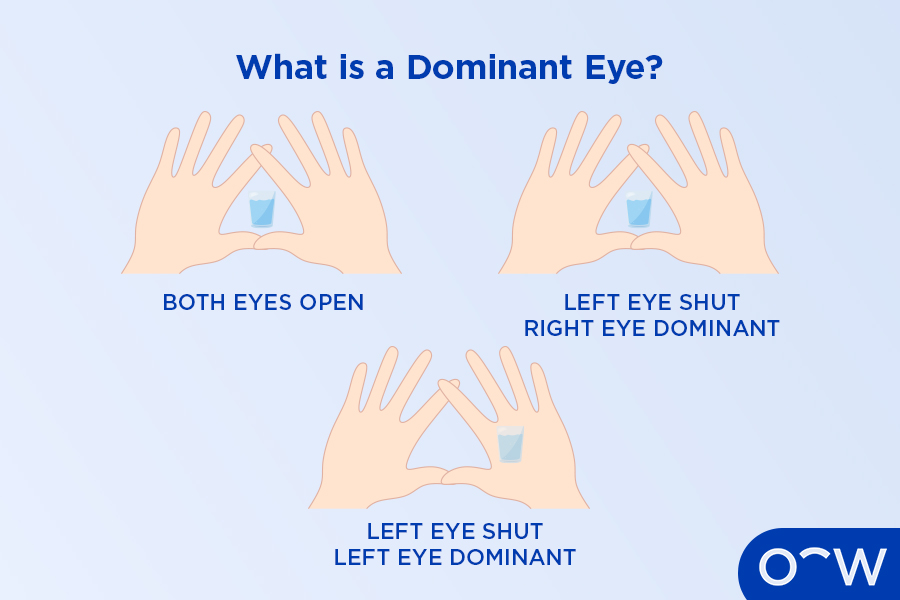
A dominant eye refers to the eye that is generally more favoured by the brain and is often used to perform functions over the other. A person's dominant eye is usually the brain's preference for input to the visual cortex, and can relay information more accurately than a non-dominant eye. A dominant eye is not necessarily the eye with the best vision. A dominant eye will generally not have any bearing on overall vision or eye health; however, it may be beneficial in performing certain tasks like photography and sports such as golf and baseball. A dominant eye can be either the left eye or the right eye, and can sometimes match a person's dominant hand, but this is not always the case.
What is a Dominant Eye Exam?
A dominant eye exam is a test that a person can take to determine which eye is dominant. Finding out which eye is dominant is not always a part of a standard eye exam with an optometrist, as knowing which eye is dominant does not always relate to overall vision quality or eye health. A person may take a dominant eye exam if they are a photographer or playing sports such as baseball and golf, as this may help with performance.
How to Tell Which Eye is Dominant?
There are three main tests a person can take at home to determine which eye is dominant, including the hole-in-a-card test, the Miles test, and the point test. An optometrist may use different methods to determine eye dominance if needed. The at-home tests to determine which eye is dominant are listed below.
- Hole-in-a-card Test: A hole-in-a-card test uses a card with a hole cut in the centre to determine eye dominance.
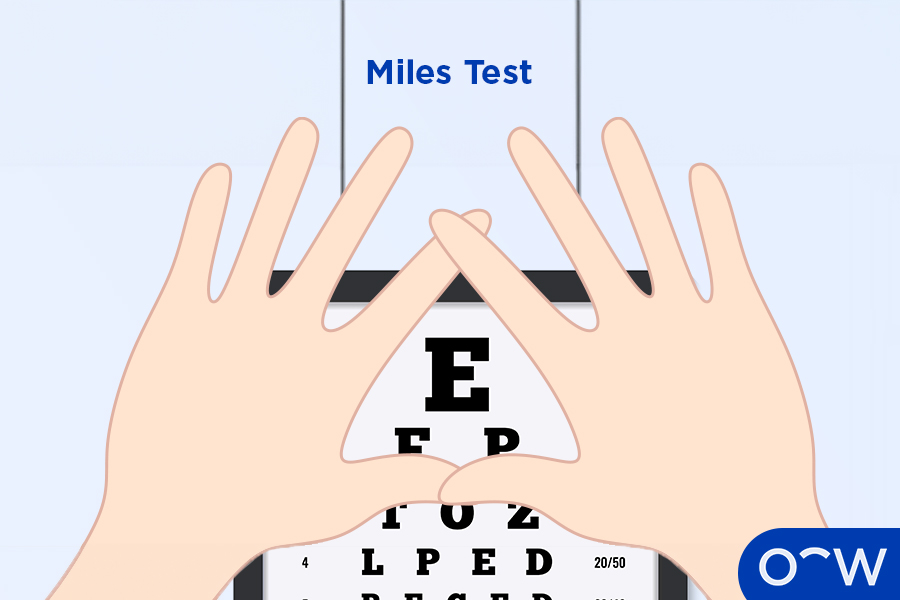
- Miles Test: A Miles test uses the hands, crossed into a triangle shape in front of the face, to determine eye dominance.
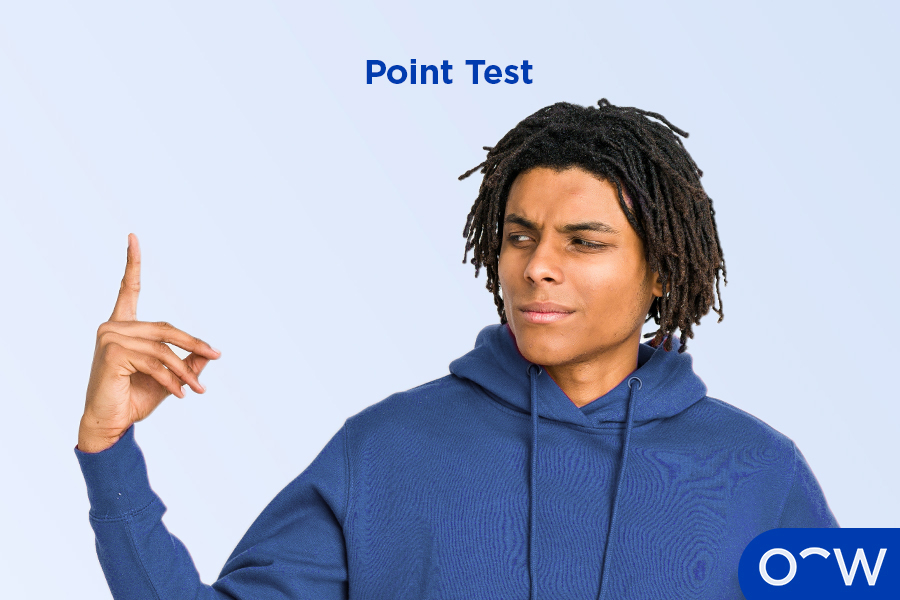
- Point Test: A point test involves pointing the index fingers at an object and closing each eye to determine which eye keeps the object in focus, determining eye dominance.
1. Hole-in-a-card Test
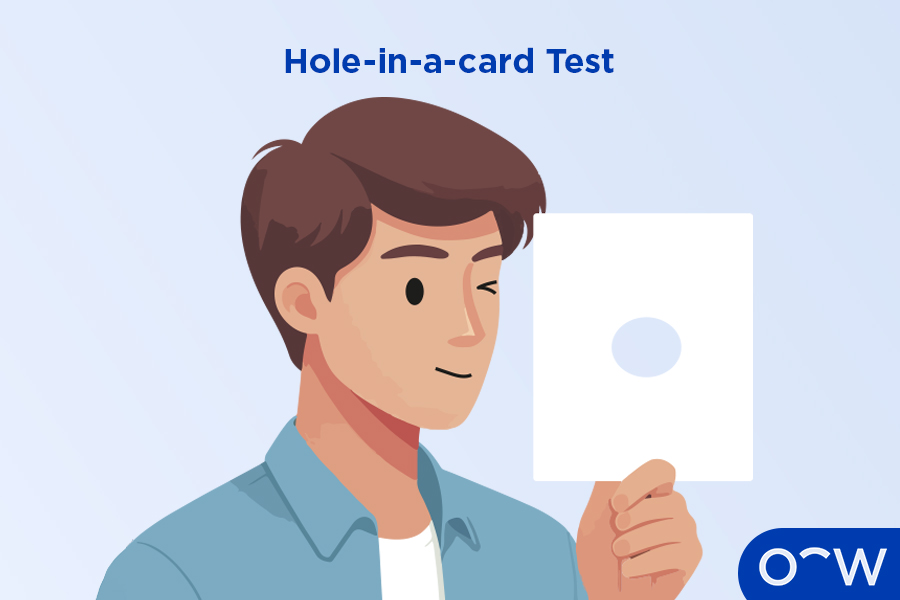
The hole-in-a-card test is a test to help determine which eye is dominant. To conduct this test, begin by cutting a hole in the middle of a piece of card or paper. The hole should be around the size of the eye. A person will then hold the card out in front of their face and look through the hole, with eyes open, at an object in the distance. The person will then slowly bring the card closer to their face. The eye that the card is in front of will be the dominant eye.
2. Miles Test
A Miles test is a simple test using just the hands to help determine eye dominance. To conduct a miles test, a person will put their arms out in front of them, crossing their hands to make a triangle shape. A person will then pick an object in the distance and look at it through the triangle. The next step is to close each eye alternatively. If the object moves out of the triangle, then the eye being used is the non-dominant eye.
3. Point Test
A point test is a test that helps to determine eye dominance. A point test is simple and involves a person clasping hands together with the index fingers out straight. A person will point the index finger at a distant object in front of the face. A person will then close each eye while looking at the object. If a person closes an eye and the fingers remain pointed at the object, this is the dominant eye.
What is the Relation Between Eye Dominance and Handedness?
The relation between eye dominance and hand dominance, usually referred to as left or right-handedness, is not fully understood and is the subject of much scientific research. Eye dominance may, but not always, correspond to a person's hand dominance. The relation between eye and hand dominance is an important area of study, as understanding it may help to improve hand-eye coordination, which is an important part of daily activities, as well as sports and photography.
What is Crossed Dominance?
Crossed dominance refers to a person with no consistent right or left dominance, such as eye or hand dominance, according to a paper by Ferrero, West and Vadillo. A person with crossed dominance might favour their left hand for writing but prefer to throw a ball with their right.
Why is a Dominant Eye Exam Important?
A dominant eye exam is generally important for those who may find their performance enhanced by knowing their dominant eye, such as athletes or those who do photography. Knowing what your dominant eye is is not always important in regards to eye health or daily activities. However, an optometrist may conduct one to help with treatment for certain eye conditions, such as strabismus or amblyopia. The importance of a dominant eye exam for athletes, for shooting purposes and photography is listed and explained below.
- Dominant Eye Exam for Athletes: Dominant eye examination is important for athletes as it can help improve aim and overall performance.
- Dominant Eye Exam for Shooting Purposes: A dominant eye exam for shooting purposes may be beneficial as it can help improve aim.
- Dominant Eye Exam for Photography: A dominant eye exam for photography or photographers may be important, as it can help with alignment and framing.
1. Dominant Eye Exam for Athletes
A dominant eye exam for athletes may be beneficial, as knowing the dominant eye may help to improve sports performance. Athletes who pursue sports such as golf, darts and baseball may find their aim when swinging or trying to hit a target is better if they identify and use their dominant eye.
2. Dominant Eye Exam for Shooting Purposes
A dominant eye exam for shooting purposes may be important, as knowing the dominant eye may allow for more accurate aim. For activities such as archery, rifle shooting, pistol shooting and hunting, being able to aim with precision plays a major role in hitting a target accurately.
3. Dominant Eye Exam for Photography
A dominant eye exam for photography, particularly with cameras, as opposed to mobile phones, may be beneficial as it can help make sure an image is aligned correctly in the frame. Using your dominant eye when taking a photograph ensures that the objects are framed more accurately.
How is a Dominant Eye Exam Done in Eye Clinics?
An optometrist or eye care professional may use a lens fogging technique during a refraction test to test accommodation and help determine which eye is dominant. Lens fogging involves having a patient focus on a distant object, with a plus power lens over the eyes. The lens will make the object appear blurry. The optometrist or eye care professional will alternatively change the lens over each eye, with the patient encouraged to determine in which eye the blur is more noticeable. The eye that is blurry and less comfortable will be the dominant eye, according to the paper Monovision Correction Preference and Eye Dominance Measurements, published in the journal Translational Vision Science and Technology.
Is a Dominant Eye Exam Needed for Treating Amblyopia or Strabismus?
A dominant eye exam is not necessarily needed for treating amblyopia (lazy eye) or strabismus (crossed eye), but may be helpful information for an optometrist or eye care professional to know. Amblyopia refers to an eye condition in which there is reduced vision in one eye. Amblyopia treatment can involve patching the dominant eye to help strengthen the weaker eye. A similar treatment can be used for strabismus or crossed eyes.
Does Oscar Wylee Offer Dominant Eye Examing?
Yes, Oscar Wylee can offer a dominant eye examination as part of a general, routine eye exam with an independent optometrist. To book a directly billed eye exam with one of the independent optometrists at Oscar Wylee, go to our Oscar Wylee booking page, visit us online, or call us to make an appointment.
Does the Dominant Eye Have Better Vision?
A dominant eye does not necessarily have better vision than a non-dominant eye. A dominant eye is the eye that the brain favours to complete visual tasks, which is not always the eye with better visual acuity.
Is it Possible not to have a Dominant Eye?
Yes, it is possible that some people do not have a dominant eye, or at least do not indicate a preference for one.
Can a Person Change Their Dominant Eye?
A person may change the eye they use for certain tasks, but this does not necessarily mean that the eye that is most dominant has changed. If a person is fatigued, for example, they may shift to the other eye when performing tasks.
Read Dominant Eye Exam: How to Tell Which Eye is Dominant in other Oscar Wylee regions and their languages.
Canada